
The FDA says serious adverse events with hyperbaric devices are rare, but that they "can and do occur", and in August 2025 it reported fires that caused serious injuries and deaths. For a home chamber, safety comes down to three things: hardware (relief valves, an emergency release, a gauge and controls you can reach from inside), oxygen handled by the maker's rules, and your doctor's go-ahead before the first session.
What the FDA actually said
On August 25, 2025 the FDA published a letter to health care providers on the safe use of hyperbaric oxygen therapy devices. It is short, and worth reading in full. The key lines, word for word:
- "The FDA is aware of reports of serious injuries and deaths with use of HBOT devices."
- "The FDA is aware of recent reports of fires that occurred with HBOT devices that resulted in serious injuries and deaths. Currently, the root cause of these events is not known."
- "While the FDA believes that serious adverse events associated with HBOT devices are rare, health care providers and users should be aware that these events can and do occur and should follow the manufacturer's instructions to help reduce potential risks."
The letter is addressed to clinics and doctors, but its advice reads almost line for line like a home checklist: follow the instructions for use, follow fire safety measures, use proper grounding, supervise the session, keep up cleaning and maintenance, avoid prohibited items such as electrical or static devices, and wear clothing of compatible materials such as cotton.
Fire: the risk that matters most
The FDA singles out fire for a reason: "there is a heightened risk of fire with use of oxygen at a high concentration." Oxygen does not burn by itself, but it makes everything around it burn faster and hotter, and a closed chamber is full of fabric.
The letter points at the usual sources. Static electricity, which some fabrics produce more than others ("such as wool and synthetic materials"). Electrical or static devices taken inside. Missing grounding. At home that translates into habits that cost nothing:
- Cotton clothing and bedding, per the maker's instructions.
- No phone, tablet, heating pad, hand warmer or e-cigarette inside unless your chamber's manual explicitly allows it.
- The concentrator placed and grounded exactly where the manual says, away from heat and open flame.
- Read the manual's list of what not to wear or bring, and follow it to the letter.
The four safety features we look for
We track four pieces of safety hardware on every chamber, from what the brand states. They are 12% of our score, and a feature the brand does not mention does not count.
- Operable from inside: you can start, stop and release pressure without a helper.
- Emergency release: a button or valve that drops pressure quickly.
- Pressure relief valves: they open on their own before the chamber goes over its rated pressure.
- Internal gauge: you can see the pressure from inside.
| Chamber | Features stated | What the brand lists |
|---|---|---|
| Skybaric Go, Lounge | 4 of 4 | Two automatic exhaust valves, emergency rotary and button exhaust valves, dual gauges, remote control from inside or outside |
| Skybaric Pro | 3 of 4 | Automatic and emergency exhaust valves, dual gauges, dual touchscreens |
| OHS Oxy-Air 36 | 3 of 4 | Inside and outside gauges, emergency pressure release button, emergency relief valve |
| OHS 36-inch, 30-inch | 3 of 4 | Internal emergency release, interior and exterior relief valves, emergency alarm, interior and exterior controls |
| OxyNova 7 | 3 of 4 | Two relief valves, interior and exterior gauges, operable from inside without help |
| Grand Dive, Dive | 2 of 4 | Double vent system capped at 4.4 psi, zippers that open from inside or outside |
| Newtowne A4-34 | 2 of 4 | Operable internally and externally, internal gauge |
| Vitaeris 320 | 2 of 4 | Dual pressure relief valves, internal pressure gauge |
| OxyLife MNS-2.0 | 1 of 4 | "Advanced safety pressure relief system" |
| Recovery Outlet 34D | 1 of 4 | Single-user interior controls |
| Respiro 270 | Not itemized | Not listed on the page we read |
A low count does not mean a chamber lacks the feature. It means the brand does not say so on the page we read. Ask, and get the answer in writing.
Can you use a chamber alone?
Brands and the FDA pull in slightly different directions here, so here is both sides. The FDA letter asks providers to "ensure the patient is properly monitored and supervised for the duration of the treatment". Several home brands, meanwhile, sell inside operation as a feature: The Recovery Outlet describes single-user interior controls "so you can run a session without an attendant", and Skybaric's remote works from inside or outside.
Our view: inside controls are a safety feature you want either way, because they mean you are never stuck. But being able to run a session alone is not the same as it being a good idea for you. Ask your doctor, and if there is any doubt, have someone at home within earshot for the first sessions at least.
Does FDA clearance mean a chamber is safe?
It means something specific, and it is worth being precise. The FDA letter says HBOT devices are Class II medical devices cleared through the 510(k) process, and that cleared devices can be found under product code CBF in its database. A 510(k) clearance means the FDA found the device substantially equivalent to one already on the market, for a stated use.
For the soft chambers we could check, that use is narrow. Newtowne's summary (K051759) lists mild hyperbaria for acute mountain sickness. Summit to Sea's (K072757) lists acute altitude sickness, "as prescribed by or under the direction of a physician", with relief valves set at 3.9 and 4 psi.
So clearance tells you the design was reviewed. It does not cover every use people put chambers to, and it does not replace following the manual. It also is not the same as "FDA Listed" or "registered", which only mean the company and device are on file. That is why we quote each brand's exact FDA wording on every review.
A home safety checklist
- Talk to your doctor before buying, and again before the first session.
- Read the whole manual before you inflate the chamber. Keep it next to the chamber.
- Check that you can operate and depressurize the chamber from inside. Practice once with someone outside.
- Cotton clothes and bedding; nothing electrical or battery-powered inside unless the manual allows it.
- Concentrator and compressor where the manual says, grounded, with the hose routed so nobody trips on it.
- Follow the cleaning, maintenance and inspection intervals. Zippers, seals and valves are wear parts.
- Know how to report a problem. The FDA takes voluntary reports through MedWatch.
Then pick hardware that makes those habits easy. Our full ranking shows the safety-feature count for every chamber, and the comparison tool puts it side by side with price and warranty.
Nothing here is medical advice. A hyperbaric chamber is a medical device: talk to your doctor before you buy or use one, and follow the maker's instructions.
Our three picks for this guide
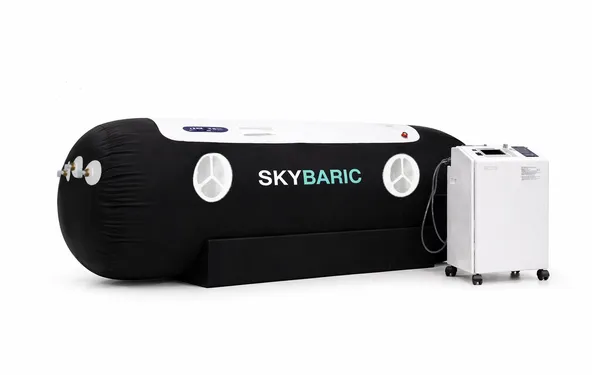
Skybaric Go
A 1.5 ATA soft chamber with oxygen, free shipping and full remote control included.
Read the review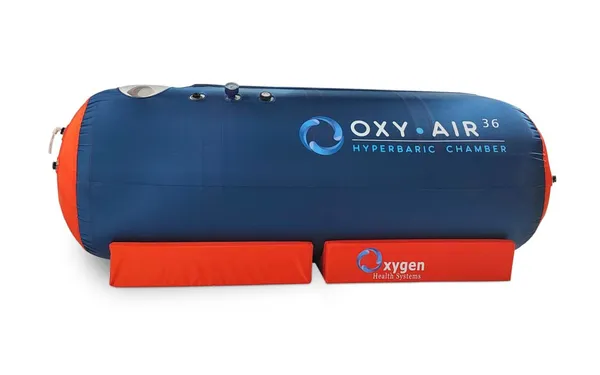
Oxygen Health Systems Oxy-Air 36 (1.3 ATA)
An all-in-one soft chamber under $10,000 with the oxygen system included.
Read the review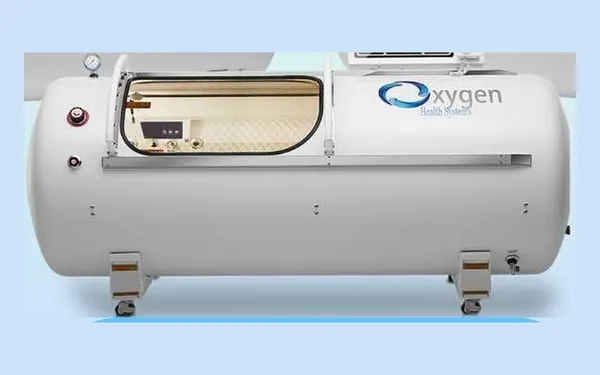
Oxygen Health Systems 36-inch 2.0 ATA Hard Shell
A full 2.0 ATA steel hard shell with the oxygen system and three-year warranty included.
Read the reviewWritten by Claire Benton, editor, home hyperbaric chambers, from the brands' own pages; prices checked November 11, 2026. Some links are affiliate links: if you buy through them, we may earn a commission at no extra cost to you. It never changes our scores. Disclosure.